Venture Builder Bootcamp

From Idea to Accelerator-Ready in 16 Steps

Venture Builder Bootcamp

From Idea to Accelerator-Ready in 16 Steps

Starting March 12, 2027 | Duration: 4 weekends | 4 modules  

as of March 12, 27

Start with an idea, and end up with a project ready to present to a competitive accelerator.

Four weekends of work and a Final Day, based on the H-FARM Startup Method: sixteen steps, with an artifact to present and defend at each step. Each module builds a piece of your venture. The next module builds on that.

What You Take Home

The builder proof: four artifacts, a working prototype, and a pitch evaluated by a panel.

A shortlist of accelerators and the application checklist for your top choice.

A page of feedback written by the panel.

SUPER EARLY BIRD
1.080 €
EARLY BIRD
1.150 €
FULL PRICE
1.280 €

For companies, the price does not include VAT.
The SUPER EARLY BIRD rate applies to the first 8 registrants; the EARLY BIRD rate applies to registrants 9 through 16.

Admission process

1

CANDIDATES

Click on the "APPLY" button and complete the application form by answering a few questions

2

COLLOQUY

Book and take an online selection interview with an Orientation and Admission expert

3

OUTCOME

Once you have passed the evaluation of the scientific committee, you can embark on your journey in H-FARM

Admission process

1.

APPLY: Click on "apply," fill out the online form, and submit your application.

2.

SUPPORT THE INTERVIEW: Participate in an online interview with the Orientation & Admission team

3.

FIND OUT THE RESULT: Receive the selection result and start your journey at H-FARM.

The program

Sixteen steps. One artifact for each step.

The program is based on the H-FARM Startup Method: four tracks, sixteen steps, and at each step, an artifact that the team must be able to present and defend.

Between modules, the team works on the Venture Work, which is due before the next module begins.

1. INTRODUCTION: IDEA, TEAM, PROBLEM

Opportunity Discovery (Steps 1–4)

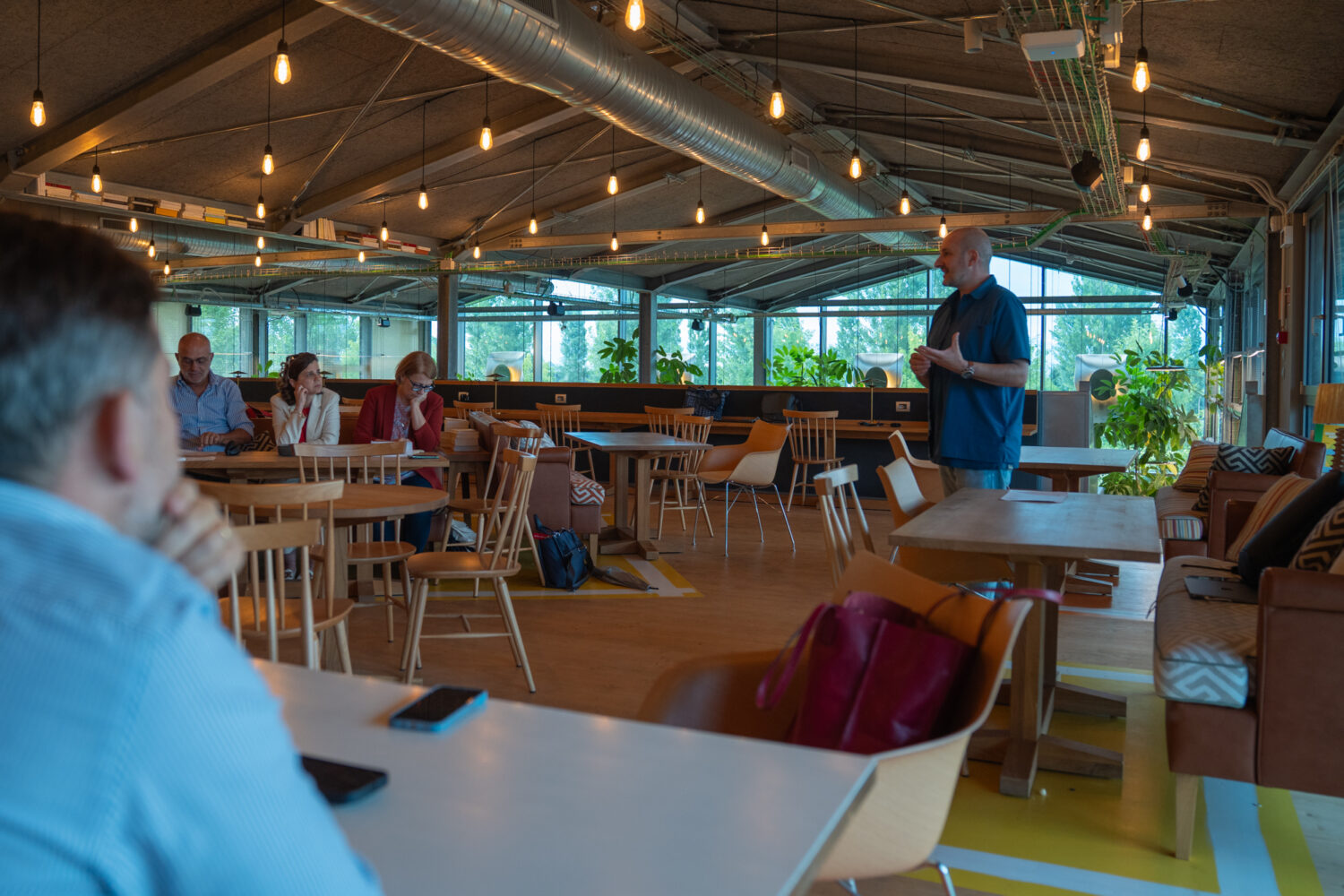
During the first weekend, you’ll assess yourself based on the 16 steps, analyze the field you’re interested in, and form a team of three or four people. With your team, you’ll define the problem and the customer, prepare the interviews, and conduct them in class. Then you’ll narrow down three solution ideas and wrap up by presenting your Idea LaunchPad Canvas.

Present: A complete LaunchPad Canvas for the chosen idea, compared with at least one alternative and presented to the class: field, problem, customer, solution.

2. STRATEGIC FOUNDATIONS: MARKET, COMPETITION, BUSINESS MODEL

Strategic Foundations (Steps 5–8)

Assess the market size based on each cited source, choose your starting segment, and define your positioning and entry point. Build the Lean Canvas and the unit economics model, then decide how to fill the gaps in your team’s skills. At the mid-program review, the instructors will review your portfolio.

Come prepared with: market analysis with cited sources and a well-reasoned initial market segment; competitive landscape with positioning; Lean Canvas and unit economics; team and skills plan.

3. Product: From Concept to Working Prototype

Product Development (Steps 9–12)

In the third module, the idea becomes a working prototype. You design user flows, create screen mockups using AI tools, and narrow the project down to the riskiest hypothesis. Then you build it using AI and no-code tools and hand the prototype over to two people from another team. 

Deliver: a design package (user flows, screen mockups, specifications) and a working prototype, along with hypotheses regarding product-market fit and a testing plan.

4. Launch, Funding, and Pitch

Preparation for Launch ( Steps 13–15)

The fourth module prepares the project for launch. Write the value proposition and pricing, choose a channel, and develop a three-year financial plan. Define the funding strategy, then build the presentation based on the deliverables from the previous modules—not from scratch.
Finish by practicing your six-minute pitch against the clock in front of the class.

Present the following: market entry plan, three-year financial plan, funding strategy with investment request, final presentation, and six-minute pitch.

Final Day

The Launch ( Step 16)

In the morning, choose the accelerator that best fits your idea and your stage of development, and prepare the application checklist. Then practice your pitch in front of the other teams and the instructors, review your presentation, and finalize it.

At 6:00 p.m., Pitch & Pop begins: each team has six minutes to present to the judges and a full house.

After the Bootcamp, you'll know

Separate facts from assumptions: For every claim about your idea, you can tell whether it’s supported by data, whether you’ve just heard it said, or whether it still needs to be proven. That way, you’ll know what to test with real customers.

Use AI to speed things up, not to make decisions for you: AI helps you conduct research, build a prototype, and crunch the numbers. However, every result must be verified against a source, and the decisions regarding the problem, the customer, and the market are still yours to make.

Pitching your project to an accelerator: you know which program is right for you and what they’ll ask for. You already have the materials ready for every question on the application: market analysis, business model, prototype, financial plan, and pitch.

Who we are looking for

The Bootcamp is designed for young professionals and those launching a startup for the first time.

You have an idea; you've been thinking about it for a while, and you want to see if it holds up before investing any more time in it.

You already have a project underway. The project is still in its early stages, and you need a way to move it forward until you can apply to an accelerator.

Do you want to start a startup but don't have an idea yet? In the first module, choose one of the challenges proposed by the Startup Center and join a team working on it.

The method

The H-FARM Startup Method is the approach the Startup Center has used to mentor over 250 startups: four phases, sixteen steps, with a deliverable at each step that the team must be able to present and defend. It’s what prevents five intense weekends from turning into a series of interesting talks. 

Four weekends, held in person at the Roncade Campus and online: from Friday afternoon (2:30 p.m. – 6:30 p.m.) through all day Saturday (9:00 a.m. – 6:00 p.m.). Between weekends, you’ll work on your project. 

Pitch & Pop

Iin the presence of

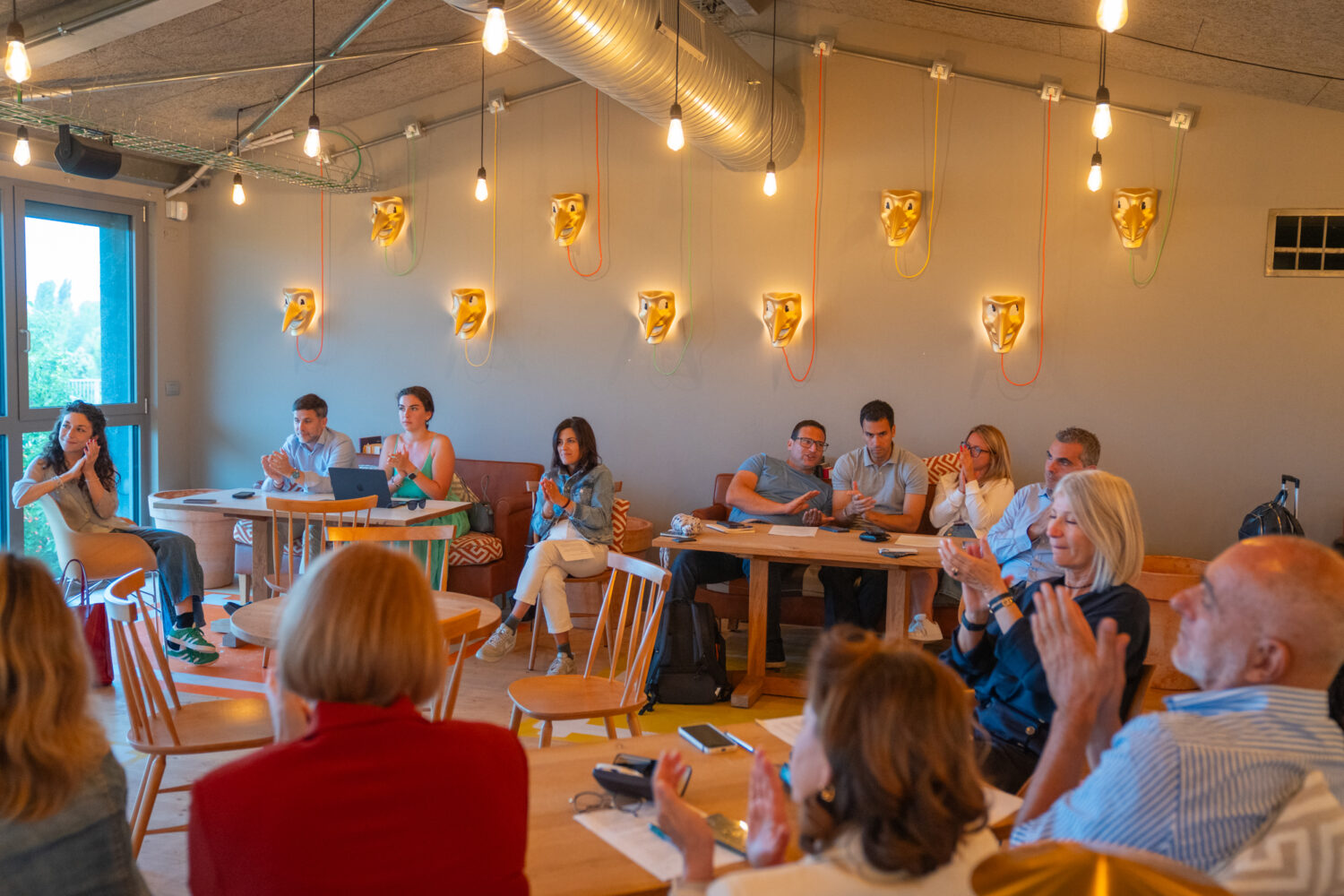
Startup pitches, beer, and popcorn. The room is set up like a movie theater, with an audience from across campus: students from H-FARM College and professionals. Each team has six minutes to present to the panel and a full house, followed by questions. The panel evaluates the teams’ evidence, methodology, consistency, answers, and delivery. The audience votes and awards the prize to the best team.

People First, AI Always

AI isn't a separate subject. It's woven into every phase of your project: research, interviews, unit economics, prototyping, and the pitch deck.
The method determines what counts as evidence. AI determines how quickly you can obtain that evidence.


WHERE AI HELPS YOU MOVE FASTER

Scan a market in an afternoon. Write up interview questions before leaving the classroom. Put together a unit economics sheet and a working prototype in a single day. Work that, until recently, took a month.

WHERE YOU'RE VALID

Even a marketable product created in ten minutes still needs a source. Even a prototype built before lunch still needs a real user to test it. This is a bootcamp rule, established on the first day: whatever the AI produces is just a draft until there’s a source, a customer, or a test to back it up.

0
WEEKEND
0
TRAINING HOURS
0
ARTIFACTS
0
PITCH DAY

Learning Experience

Our program does not consist of traditional lectures.
At H-FARM Business School, learning is continuous and integrated; we design comprehensive educational experiences to help you achieve your goals and foster exchange, networking, and personal growth.

LATE NIGHT
: WHO'S INVESTING?

 On Friday of Weekend 4, after class, two informal hours with an investor: how a startup looks from the other side of the table, what makes an investor say yes, and what makes them close the email after just a couple of lines. No slides, just real questions.

STORMING PIZZA
, AND IMPACT STORIES

On the first Friday, before we open the canvas, we’ll take you to Storming Pizza: see how to pitch in front of an audience and what others are building. On campus weekends, founders who have failed, pivoted, raised capital, and sold their companies answer the questions you won’t find in textbooks.

YOUR "
" PROJECT IS THE PROGRAM

No exercises based on made-up companies. Each weekend ends with a deliverable from your startup: a business model canvas, market analysis, prototype, or pitch deck. Put together, these form your final pitch. If you come in without an idea, you’ll work on a challenge as part of a team formed on the first day.

Career Boost

It consists of a series of activities focusedon professional development that will help you define your career goals and identify your strengths, with the aim of improving your communication, teamwork, and leadership skills, thereby accelerating your professional growth.

Soft skills

We believe in the value of soft skills, and in our programs we offer a structured opportunity to discuss and analyze the most in-demand soft skills today and how best to develop them by building on your own strengths.

Personal Branding

A workshop focused on using the canvas to define each student’s unique selling proposition (USP), build motivational drivers, and focus on soft skills.


Finance your training

“Per Merito”loan

with Intesa Sanpaolo

“Futuriamo”loan

with BNL

Paymentin installments

with H-Farm Business School

Paymentin installments

with SeQura

MASTER'S FACULTY

Venture Builder Bootcamp

Venture Builder Bootcamp Applicants

Frequently Asked Questions

Do you need a college degree or a technical background?

No. You don't need a degree; we evaluate your motivation and the coherence of what you want to build.

Do I have to be on campus every weekend?

No.Modules 1 and 3 and the Final Day are in-person in Roncade, while Modules 2 and 4 are online.


Can I participate even if I don't have a startup idea yet?

Yes. That's exactly what the first weekend is for: you choose a challenge, join a team, and leave with a real-world problem to work on.

Will you let me join an accelerator right away?

No, but we'll help you get ready to apply. You'll walk away with the process, the tools, and the application checklist.

Is AI a separate subject?

No, it's the way you work in every session. What you produce remains a draft until there's a source to back it up.