Stop just “chatting” with AI:
Prompt engineering is the framework that turns ideas into business results

If you think prompt engineering is just about typing “please” into a chatbot, you’re already two years behind the times.
A prompt is much more than just a question: it is the logical framework through which human intelligence guides artificial intelligence.
Making the transition from a mere operator to an AI architect isn’t just a technicality; it’s the leap forward needed for those who want to stop chasing innovation and start designing it.
The global market is currently undergoing a critical transition phase, which can be described as the definitive shift from the enthusiasm of adoption to the maturity of strategic execution. While 2024 was the year of discovery and widespread experimentation with Generative AI (GenAI), 2025 and 2026 are shaping up to be the two years of scalability and structural transformation of business processes. (1)
In this context, the concept ofa “prompt”is no longer just a string of text, but the fundamental logical architecture underpinning the new cognitive industrial revolution.
The economic potential of artificial intelligence has been estimated at approximately $4.4 trillion (equivalent to giving 50 Margherita pizzas delivered to every single person in the world, every year) in annual added value, with an impact concentrated primarily in marketing, sales, and software engineering. (2) However, analysis conducted by leading global think tanks reveals a significant discrepancy between the adoption of the technology and the actual generation of profits (EBIT).
According to McKinsey & Company’s “State of AI 2025” report, although 78% of organizations now use AI in at least one business function, only one-third say they have successfully scaled these solutions across the entire organization. (3) This phenomenon, dubbed“Pilot Purgatory,”is not a technological failure, but a symptom of a lack of strategic vision in using AI as a lever for business transformation. (4)
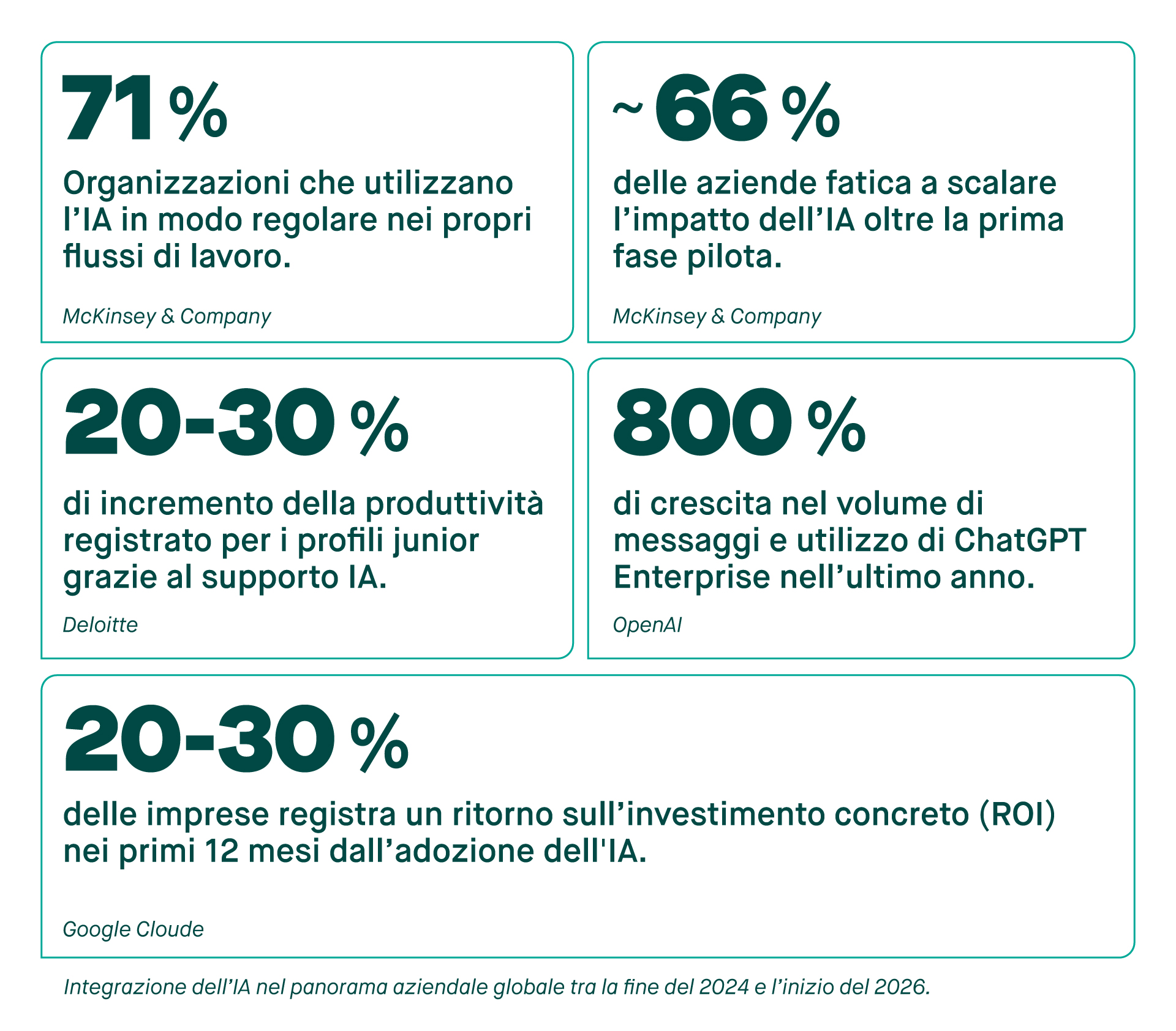
Research by the BCG Henderson Institute supports this view: while 75% of leaders consider AI a strategic priority, only 25% are able to turn this ambition into real value. (5)
The secret of "high performers"lies in the rigorous application of the 10-20-70 principle: dedicating 10% of efforts to algorithms, 20% to technological infrastructure, and 70% to people, processes, and cultural transformation. (6) Without massive investment in prompting —understood as high-level human expertise—AI remains a cost rather than a value multiplier.
The key shift in modern leadership lies in evolving from an “operator” to an “architect” of AI. The operator limits themselves to generic requests, treating AI as a simple chatbot; the architect, on the other hand, masters the anatomy of an effective conversation, understanding how a language model (LLM) “thinks” and crafting precise instructions that guide the machine toward excellent output. The quality of the output is a direct consequence of the quality of the input. (7)
This methodology is not just about efficiency, but about the ability to navigate, synthesize, and analyze large sets of documents, transforming raw data into strategic insights. The“Deep Research”methodology leverages AI to identify hidden connections and patterns across multiple sources, drastically reducing analysis time from days to hours. (8)
The Vision of H-FARM Business School: Human-Centric Progress
In a world dominated by technology, H-FARM Business School occupies a critical and essential space. Our vision is clear: to transform innovation into human progress. We don’t just teach technical skills; we cultivate a mindset. The “H” in H-FARM stands for Human: we firmly believe that human intelligence must guide artificial intelligence. Only then does innovation cease to be a cold technical tool and become a driver of growth for society.
Our mission is to help people realize their full potential so they can tackle the exponential age with grit and determination. To do this, we break down the barrier between theory and practice through a“learning by doing”approach.
It is precisely this need to combine strategic vision with practical action that gave rise to the AI Super Power. It is not just a course, but the practical embodiment of our philosophy: to give humans the “superpowers” needed to lead the technological revolution rather than be subjected to it. Featured in Harvard Business Review Italia (November 2025) as one of the best in the training landscape, our program addresses the most urgent challenge facing global business: the shortage of talent and skills, which accounts for 63% of barriers to innovation. (9)
Becoming an AI Architect means unlocking your own “superagency, ” transforming technology into a force that amplifies our humanity.
The message for leaders and companies is clear: the era of piecemeal experimentation is over. Entering the era of AI maturity requires courage and a willingness to invest heavily in human capital. AI is no longer just a technological issue; it is the crucial competitive advantage for those shaping the strategies of the future.
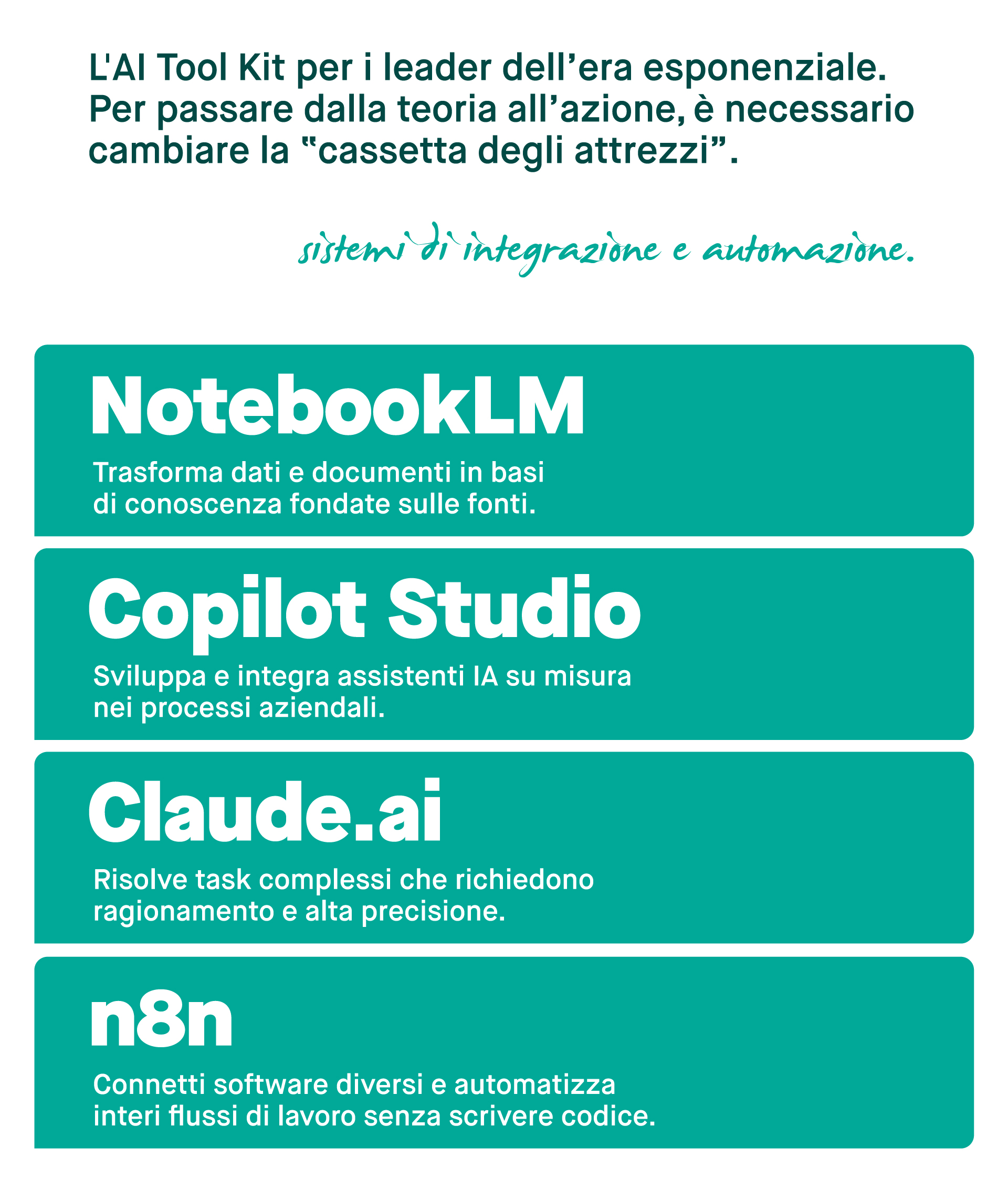
In a world where 40% of current skills will be obsolete within five years, the ability to learn and unlearn through interaction with intelligent systems is the only true, lasting competitive advantage. (10) H-FARM Business School provides you with the compass to navigate this complexity and turn it into an unprecedented opportunity.
The future doesn’t just happen—it’s planned. Are you ready to become the architect of your own tomorrow?
Equipped with all the superpowers that AI can give you.
Sources: