From Human Resources
to Hybrid Resources
"Artificial Intelligence is not just a technology, it is a new resource at work."
With this statement, Professor Pierluigi Fasano, Director of the Competence Centers at H-FARM Business School, summarizes a vision that radically changes the way we look at the future of organizations.
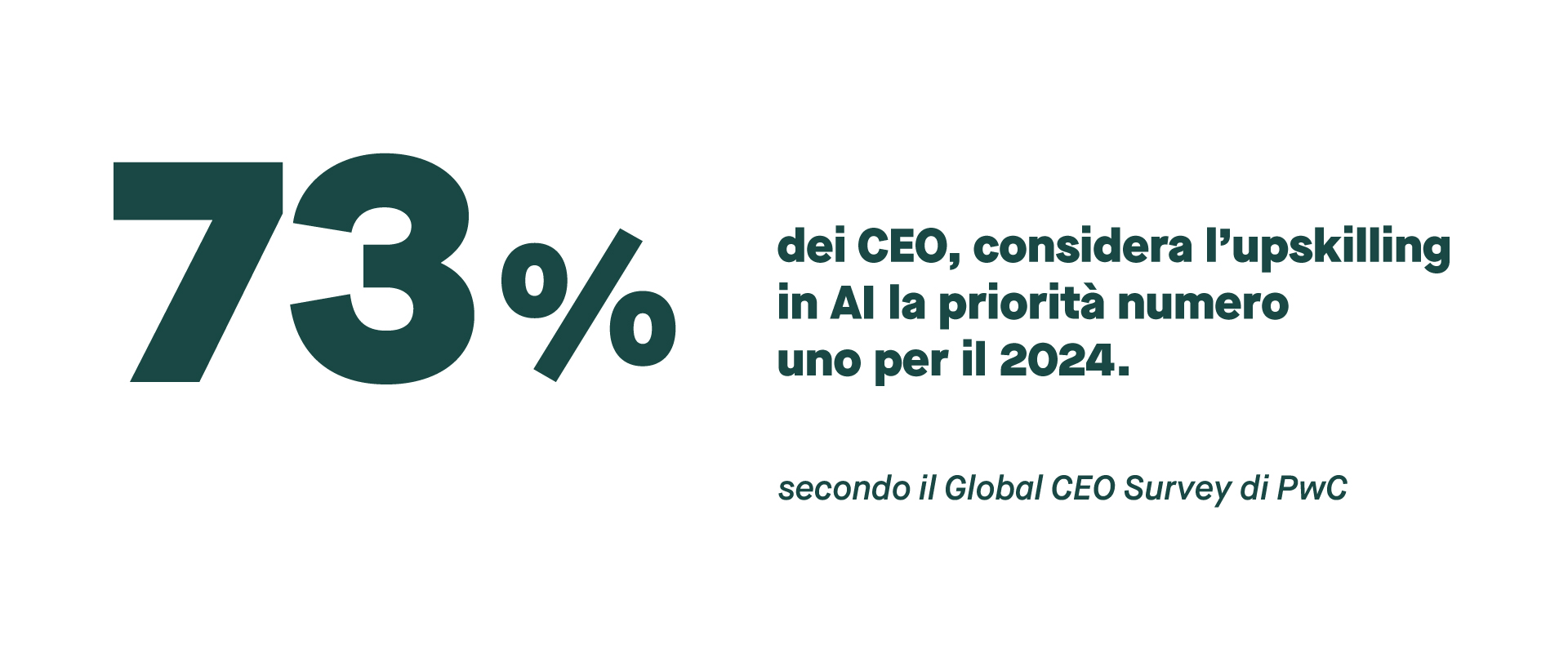
73% of CEOs 73% of CEOs, according to the Global CEO Survey , consider upskilling in AI to be the number one priority for 2024. But, as Prof. Fasano points out, a superficial knowledge of technology is not enough: we need to rethink the entire organizational architecture of work, where people management and algorithm management can no longer be separated.
When Moderna merged its HR and IT departments under a single Chief People and Digital Technology Officer, it wasn't just an organizational exercise: it recognized that the workforce of the near future will be hybrid, AI and humans.
This is where the most profound corporate transformation takes place, with HR moving from "Human Resources" to Hybrid Resources.
In the H-FARM Business School Competence Centers — Strategy & Leadership, Digital Operational Excellence, Global Commerce & Omnichannel and Entrepreneurship & Corporate Innovation — we study how to integrate artificial intelligence in a conscious and strategic way.
Interview with Pierluigi Fasano
Pierluigi, let's start with a provocative statement. AI is a technology that is changing everything, but you have made a particular choice: to include artificial intelligence not in technology, but alongside human resources in the enabling factors. Why?
Because AI is not just a technology, it is a new type of resource available for work with capabilities similar to, but not equal to, those of humans. When Moderna decided to merge its HR department with IT, it was not just optimizing processes. It was recognizing a truth: the skills of the future come from hybridization. That's why when we write HR, we now talk about "Hybrid Resources," no longer Human Resources. In a few years, every company will have more "AI agents" than human workers in its workforce.
What does that mean in practical terms?
It means that 73% of CEOs, according to PwC's latest Global CEO Survey, consider upskilling in AI to be the number one priority for 2024. But it's not enough to just give people a smattering of knowledge about technology. The entire organizational architecture of work needs to be rethought. Moderna has merged HR and IT under a single Chief People and Digital Technology Officer. Today, this is an exception, but it could become the rule tomorrow when we realize that you can no longer separate people management from algorithm management. Our vertical Competence Centers—Strategy & Leadership, Digital Operational Excellence, Global Commerce & Omnichannel, Entrepreneurship & Corporate Innovation—all look at this hybrid dimension, even within the specificity of individual sectors.
Give us a practical example of this hybridization.
Take our Strategy & Leadership center. Today's leaders are asking themselves fundamental questions: "How should my business model change when AI can generate personalized products in real time? How do I redesign my operational processes if an algorithm can optimize the supply chain better than a team of experts? What services should I create when my customers interact with AI agents?" But there is an even deeper question: "How does my leadership evolve when I have to lead an organization where evolution travels at exponential speeds with a hybrid workforce?"
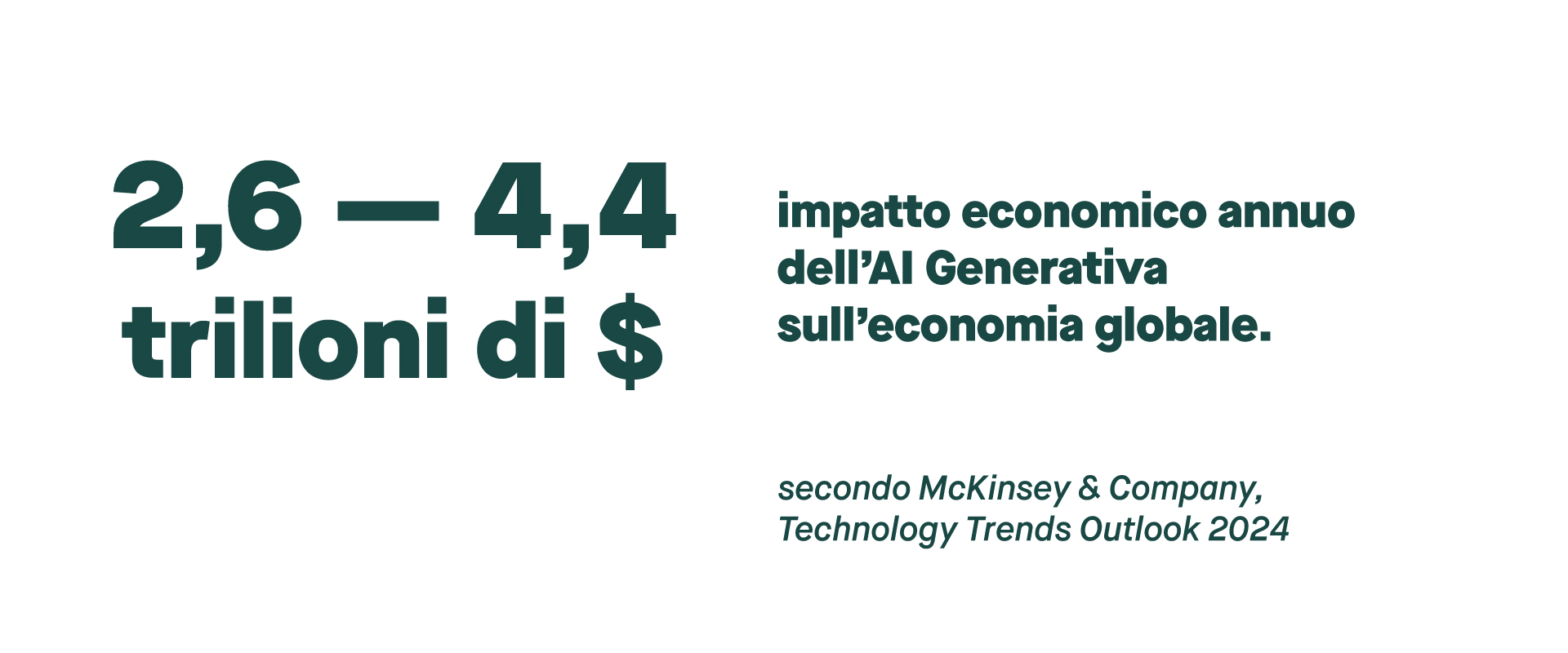
We are studying the leader of the future, who no longer commands linear processes but orchestrates hybrid ecosystems where humans and AI collaborate. McKinsey estimates that generative AI could add between $2.6 trillion and $4.4 trillion in annual value to the global economy. But the difference will be made by those who can answer these questions by orchestrating this technology with human vision, intuition, the ability to build trust, and reinvent their value proposition in a world of exponential change.
And in daily operations?
At the Digital Operational Excellence Center, we are studying the arrival of the era of "Autonomous Operations," and here we need to completely reverse our mindset. It is no longer "Where can I use AI?" but "Where CAN'T I use it?" assuming that AI will be the first choice everywhere and identifying the few points where human intervention remains irreplaceable. Siemens has factories where AI makes 78% of operational decisions in real time. Revolut has blocked fraud worth over €550 million by making security decisions in milliseconds. Reversing the proof changes everything: instead of looking for applications, you look for exceptions.
So, AI at the helm of decision-making?
In a world dominated by data, this is inevitable, but with invisible and powerful human governance. At our center of expertise, we study what we call "Decision Architecture"—AI optimizes, but humans design the optimization criteria using data and intuition. Revolut has reduced fraud losses by 30% precisely because their algorithms know when to "break the spell" of the fraudster and pass control to a human expert. Netflix uses algorithms to decide what content to produce – investments of $15 billion a year – but the values that guide those algorithms are defined by human teams who think about culture, society, and the future.
And in commerce? How does it change when consumers also become "AI agents"?
This is the most fascinating frontier. In our Global Commerce & Omnichannel division, we are simulating "AI-to-AI" markets. Imagine Tesla's AI negotiating directly with a battery supplier's AI, optimizing price, sustainability, and performance in milliseconds. But who programmed those negotiation parameters? Humans. The marketing of the future will no longer be persuasion, it will be "Algorithm Seduction"—making your algorithms more attractive to other people's algorithms.
What does this mean for professionals?
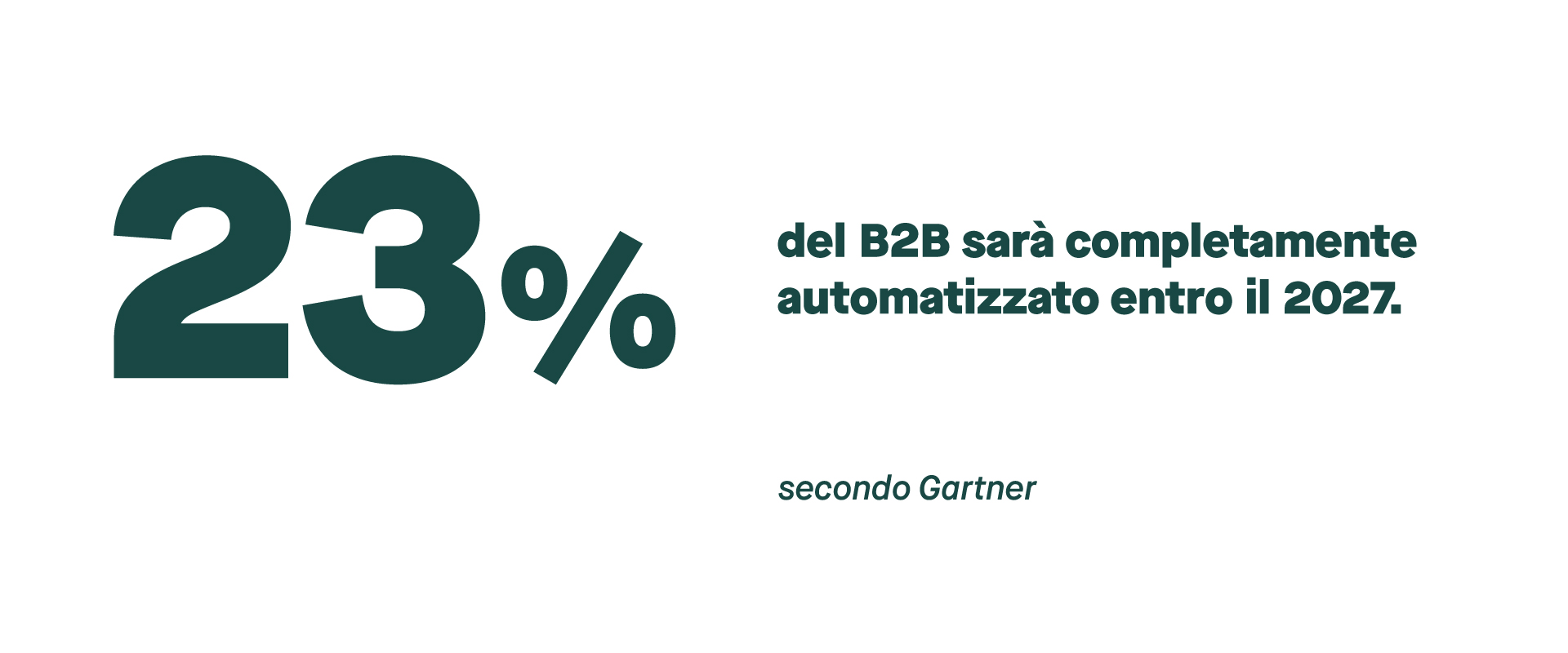
What we need to train "Algorithm Whisperers" — people who know how to program desires into algorithms, who understand how one AI makes purchasing decisions for another AI. Walmart already uses AI that automatically purchases from suppliers who have sales AI. 23% of B2B will be fully automated by 2027, according to Gartner, and I think that's even a conservative estimate. But behind every automated transaction is a human strategy that has defined what "value" means.
How is this new hybrid generation formed?
With real projects, not just presentations. But here I must be blunt: in Italy, we have an urgent problem. Only 8% of our companies have integrated AI into their operations, compared to a European average of over 20%. On a global scale, we learn that 90% of business innovation projects fail. Not because of a lack of ideas, but because they are already obsolete in a world that is changing at an exponential rate. While companies invest millions in "innovation labs" that produce prototypes that are never scaled up, hybrid startups—those that are born already orchestrating humans and AI—raise record amounts of capital. Our Entrepreneurship & Corporate Innovation center does not train traditional innovators but "Innovation Orchestrators" — professionals who know when AI can accelerate innovation and when human intelligence is irreplaceable. We are counting heavily on this center to bridge this competitive gap.
What is the most sought-after skill today?
Translation! No, I don't mean languages, I mean the ability to translate between the human world and the digital world. If we add the 90% failure rate of innovation to the 67% of Fortune 500 companies are looking for "AI translators" —people who know how to make algorithms and strategy, data and vision, efficiency and creativity talk to each other—we immediately get a clear picture of the type of skills that are lacking. What will happen in two years when there are more "AI agents" than human workers in the company? This is the heart of the transformation from HR to Hybrid Resources. This is the heart of our mission.
What is your vision for the future of artificial intelligence beyond current LLMs?
I fully agree with Yann LeCun: the limitations of current Large Language Models will be overcome by systems that understand the environment and physical rules like we humans do. World Models represent the most concrete promise—AI that not only processes text, but develops internal models of the real world, capable of reasoning, planning, and interacting with the physical environment. This will change everything. The next revolution will no longer be linguistic, it will be perceptual and spatial.
The million-dollar question: a forecast for the next five years?
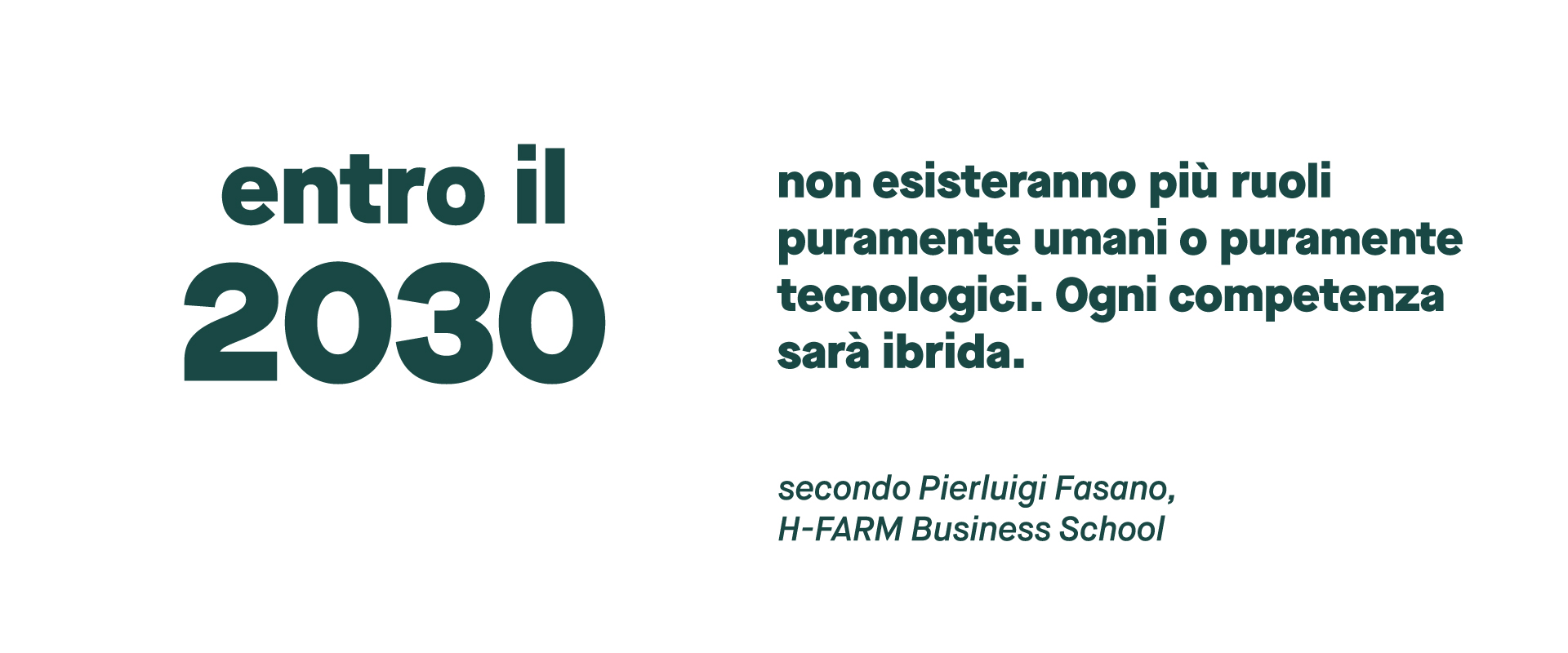
By 2030, there will no longer be purely human or purely technological roles. Every skill will be hybrid. We believe this so strongly that our Business School is not only preparing professionals for this future, it is creating it thanks to its Competence Centers. Because the future cannot be predicted, it must be designed. And it must be designed together: humans and AI, in perfect symbiosis.